
Paving Information Hub
Paving in Salisbury, MD: Your Complete Guide
Chesapeake Asphalt built this resource to help property owners understand paving, pavement maintenance, and the options available for residential and commercial properties throughout Salisbury and Delmarva — so you can make informed decisions before any work begins.
Paving decisions are rarely simple. Whether you're replacing a driveway, planning a commercial parking lot, or deciding between repair, resurfacing, and replacement, the right choice depends on the condition of the surface, the base underneath it, how the property is used, and how water moves across it.
This guide explains how asphalt paving works, what each common service actually does, how to tell repair from replacement, and what to consider when paving in the Salisbury and Delmarva region. It is written to answer specific questions directly — you can read it start to finish or jump to the section you need.
Quick Answers
Paving in Salisbury, MD: Quick Answers
Direct answers to the most common paving questions. Each one stands on its own.
What services does an asphalt paving contractor provide?
An asphalt paving contractor installs, repairs, and maintains paved surfaces such as driveways, parking lots, and private roads. The work can include site preparation, grading, asphalt installation, compaction, repair, and ongoing pavement maintenance like sealcoating and line striping.
What types of properties can be paved?
Both residential and commercial properties can be paved. Residential work typically involves driveways and parking pads, while commercial work covers parking lots, private drives, and loading areas built to handle heavier, more constant traffic.
What is the difference between asphalt paving and resurfacing?
Asphalt paving is the full installation of a new asphalt surface, including base preparation. Resurfacing (an overlay) applies a new layer of asphalt over an existing surface, and is only suitable when the underlying base is still structurally sound.
When should asphalt be repaired instead of replaced?
Localized damage like isolated potholes, small cracks, or surface wear can often be repaired without replacing the entire surface. Widespread cracking, drainage failure, or a failing base usually point toward resurfacing or full replacement.
What is sealcoating?
Sealcoating is the application of a protective coating over an existing asphalt surface. It renews the dark appearance of the pavement and adds a barrier that helps slow damage from moisture, UV, and oil. It is a maintenance service, not a repair for structural damage.
What is tar and chip paving?
Tar and chip (chip seal) is a paving method where liquid asphalt is applied and stone aggregate is pressed into it, producing a textured, stone-colored surface. It is commonly used for driveways, private lanes, and rural roads.
How is tar and chip different from asphalt?
Traditional asphalt produces a smooth, dark, continuous surface, while tar and chip produces a textured, lighter, stone-grain surface. Tar and chip tends to be used for lower-traffic residential and rural applications; asphalt is the standard for higher-traffic driveways and parking lots.
What is parking lot line striping?
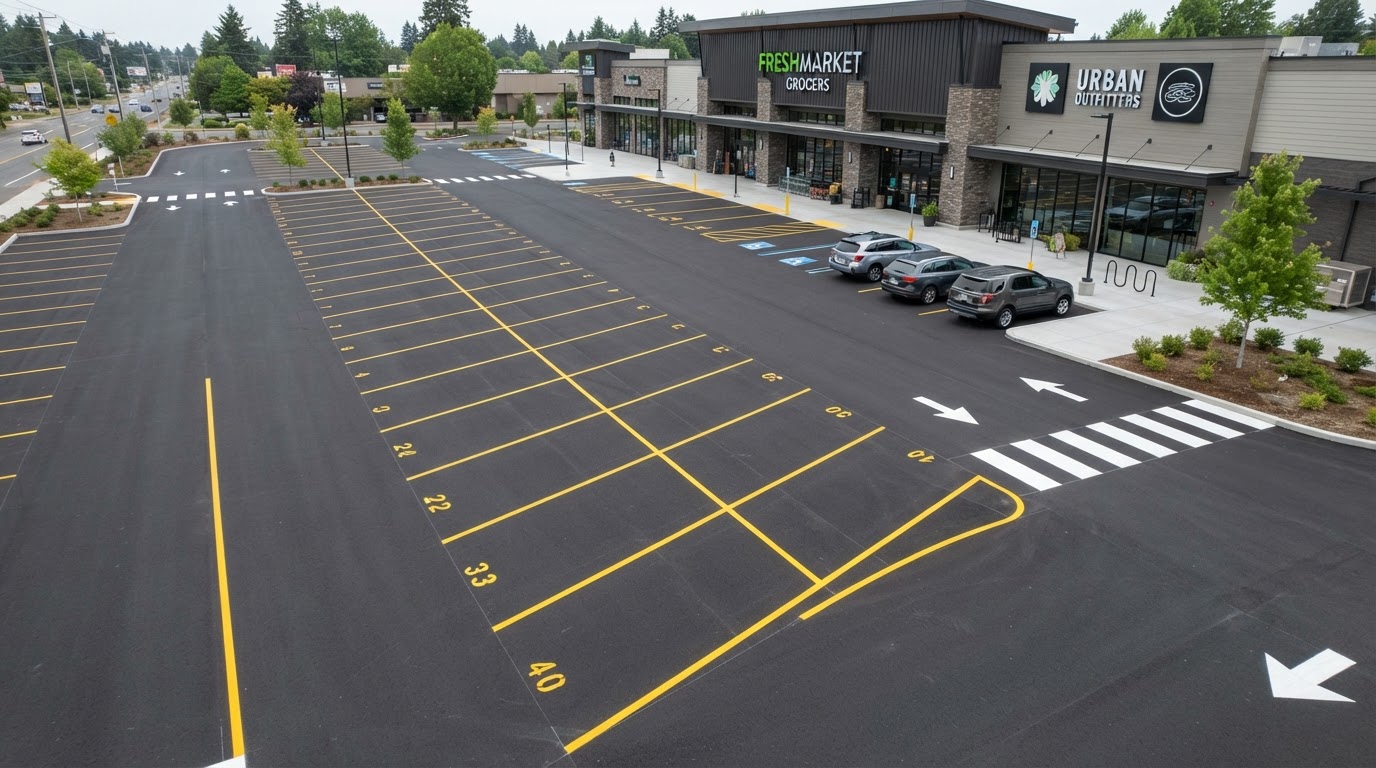
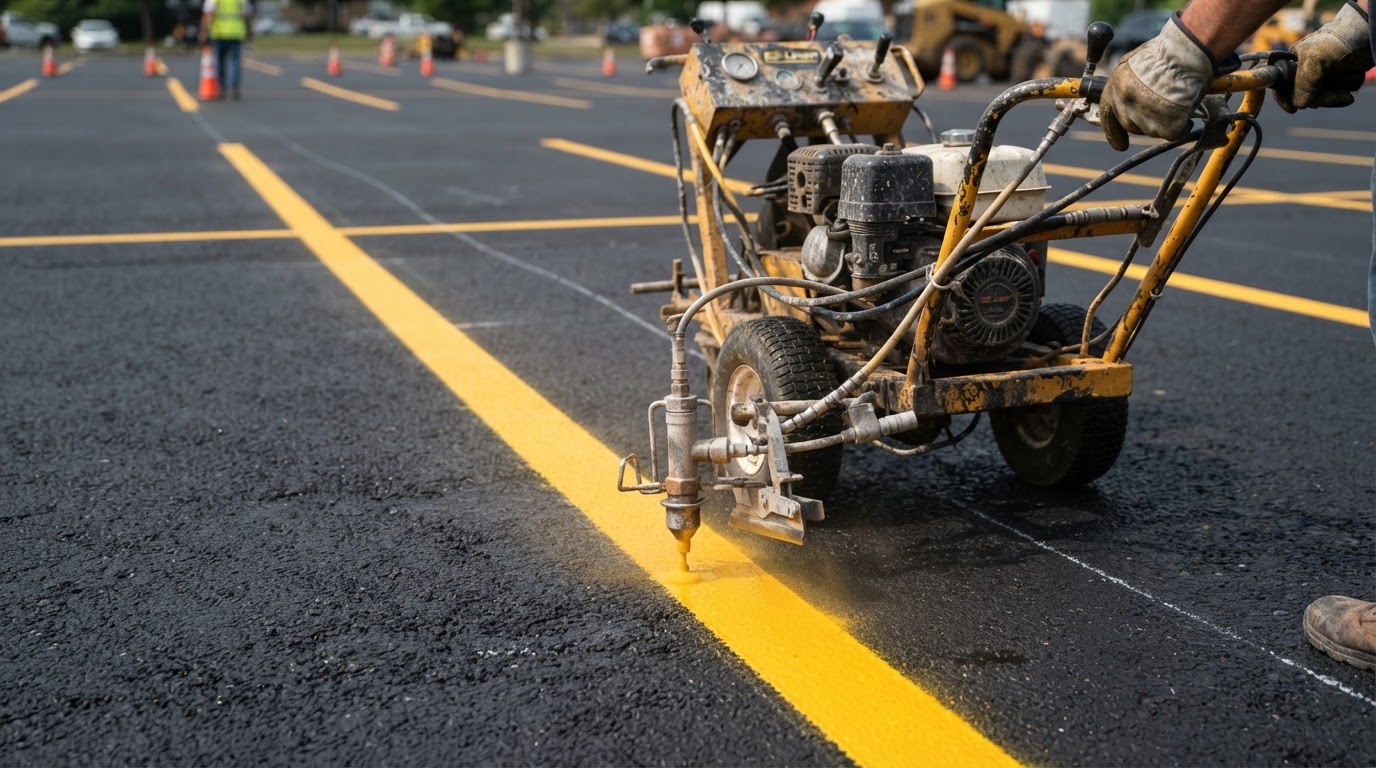
Line striping is the application of painted markings — stall lines, arrows, crosswalks, and accessibility symbols — that organize parking, direct traffic flow, and mark accessible spaces and fire lanes on a commercial lot.
What should I look for when choosing a paving contractor?
Look for a contractor who evaluates the site and base before quoting, explains the proposed preparation and materials, handles both residential and commercial work if you need it, and provides a clear written scope. Proper base preparation and drainage planning matter more than surface appearance alone.
How do I request a paving estimate in Salisbury, MD?
Call (443) 599-2737 or submit the estimate form on this page. Chesapeake Asphalt will discuss the project and schedule a time to evaluate the site before recommending an approach.
Asphalt Paving
How Does Asphalt Paving Work?
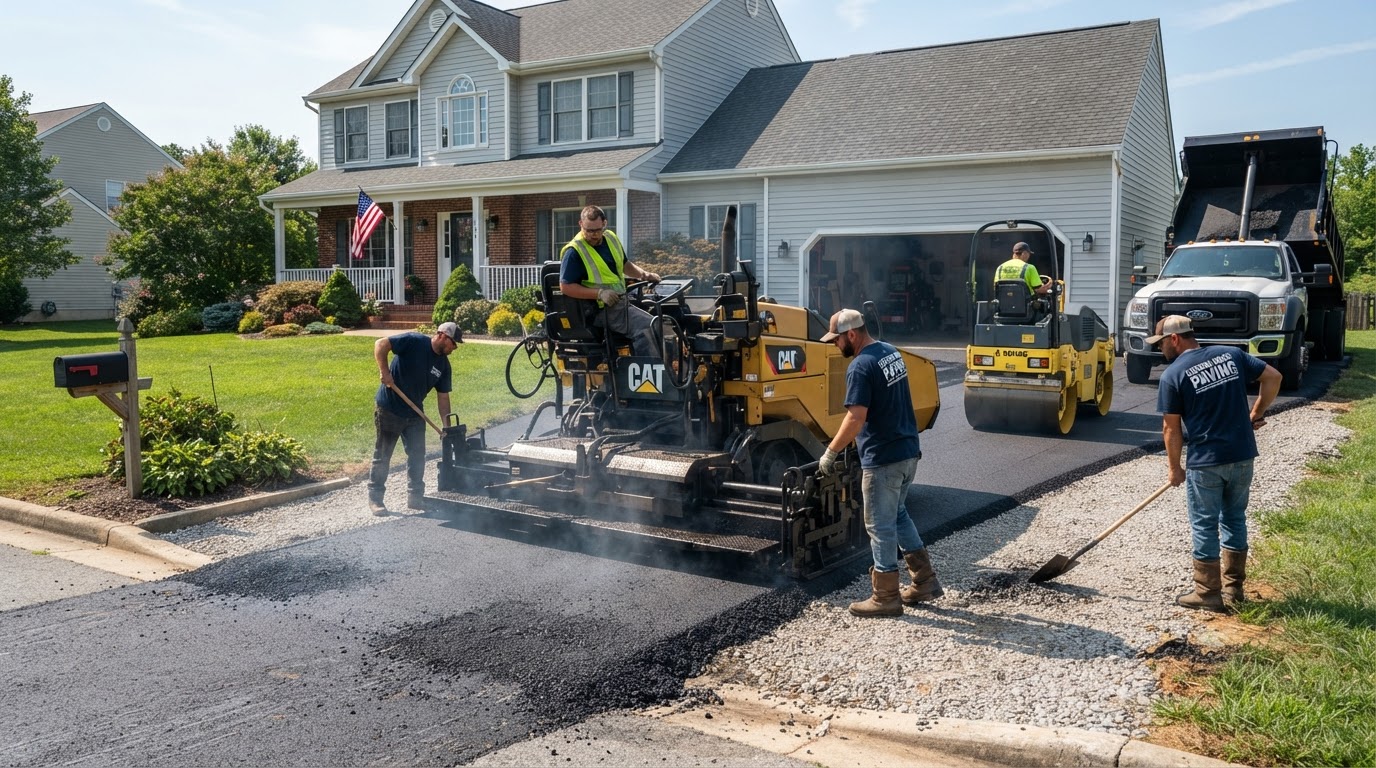
Asphalt paving is the full installation of a new bituminous surface. The process generally follows a sequence that builds from the ground up, because the surface only lasts as long as what's beneath it.
- Property and site evaluation — measuring the area, reviewing slope and drainage, and scoping the project.
- Existing surface evaluation — deciding whether old pavement can be overlaid or must be removed.
- Preparation — clearing, grading, and establishing the sub-base.
- Base and grading — building and compacting the aggregate base to the correct slope so water sheds off the surface.
- Asphalt installation — laying hot-mix asphalt at a depth suited to the expected traffic.
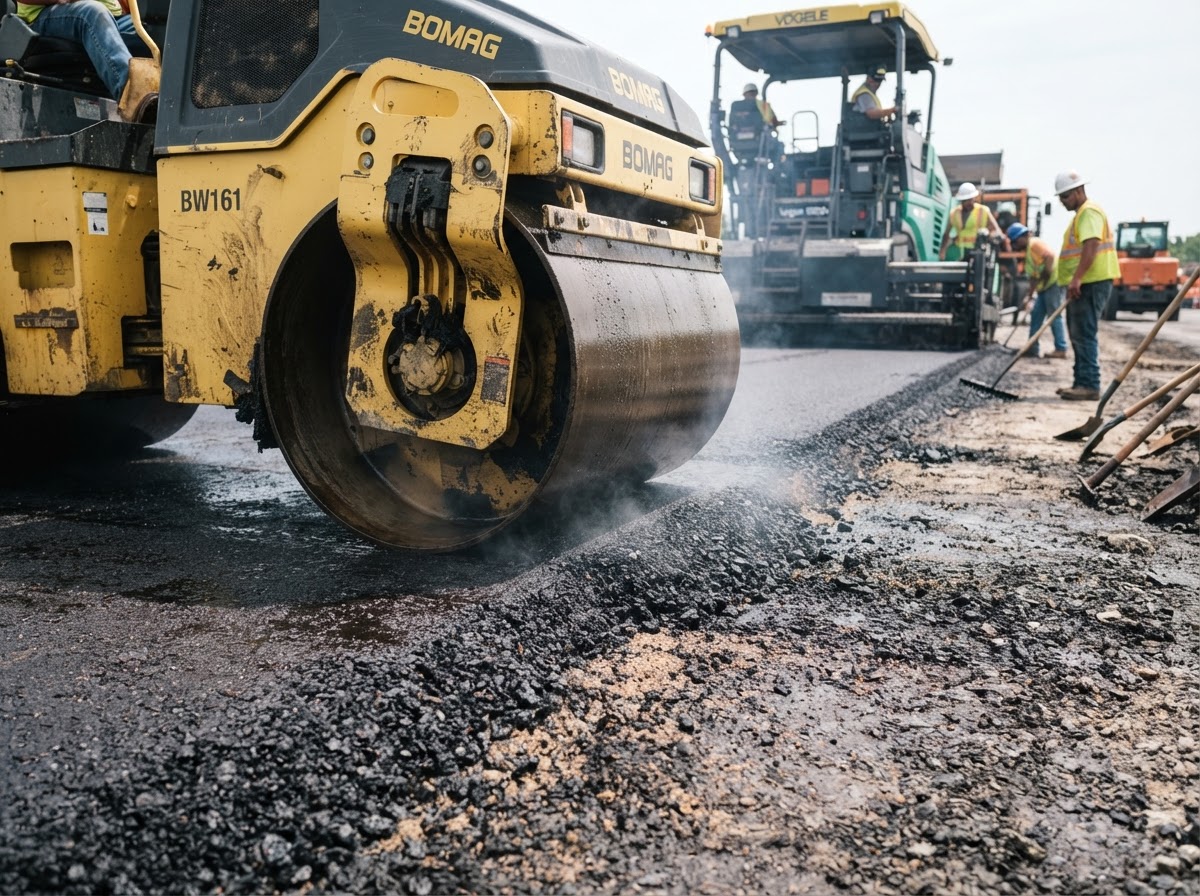
- Compaction — rolling the asphalt to a dense, smooth, finished surface.
- Final inspection — checking edges, drainage, and the finished surface before reopening to traffic.
Learn more about how we approach this on our asphalt paving services page.
Driveway Paving
What Should Salisbury Homeowners Know About Asphalt Driveways?
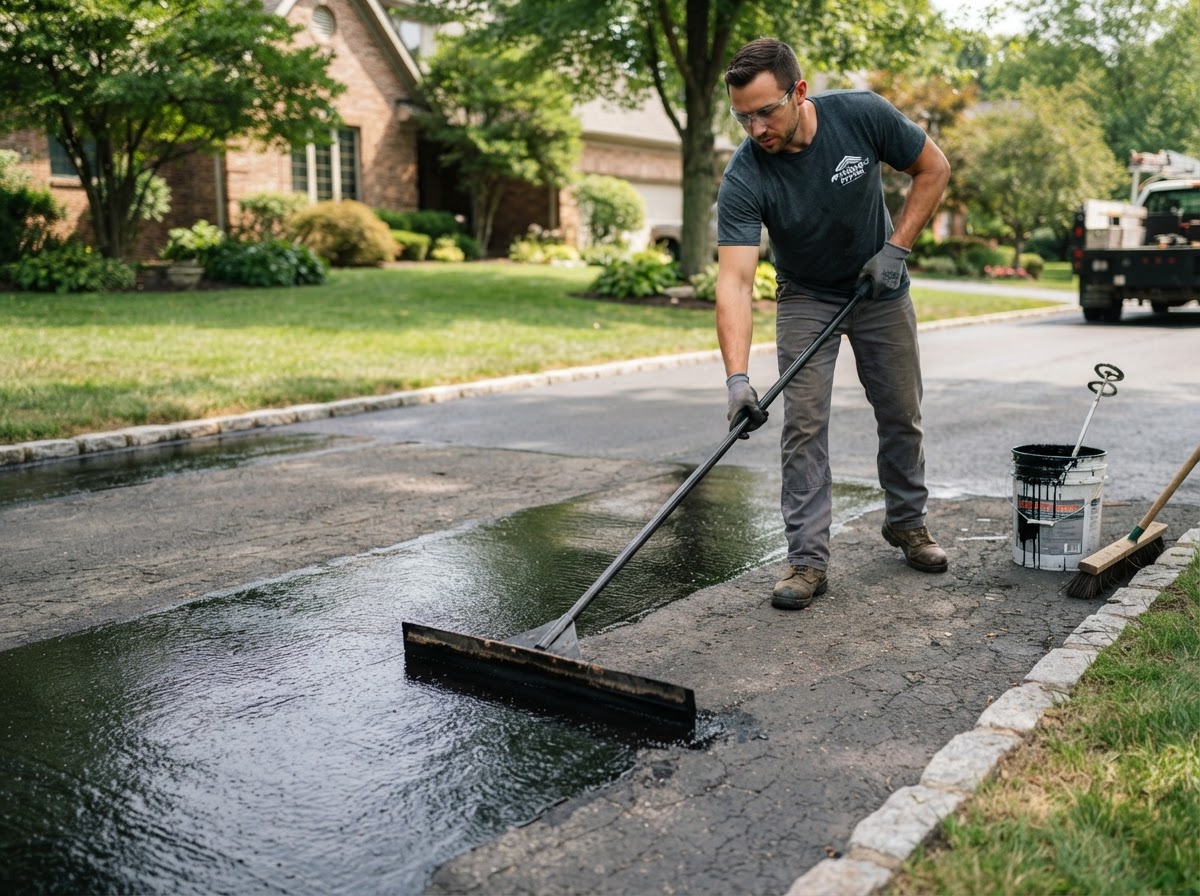
A residential driveway is the most common paving project, and its performance comes down to a few factors homeowners should understand before paving.
New driveways vs. replacement
A new driveway on a fresh site starts with base preparation from scratch. A replacement removes the old surface, evaluates whether the existing base is reusable, and installs new asphalt over a sound foundation.
Resurfacing considerations
An overlay can refresh a driveway that's still structurally sound, but it won't fix a failing base. If the driveway has extensive cracking or settling, replacement is the longer-lasting choice.
Drainage and base preparation
The driveway must be graded to direct water away from the home and off the surface. A properly compacted base prevents the dips and cracks that shorten a driveway's life.
Edges and maintenance
Clean, defined edges keep the driveway structurally tidy and resist crumbling. Routine sealcoating and prompt crack filling extend the surface's useful life.
When the surface condition is unclear, a professional evaluation is the reliable way to decide between repair, resurfacing, and replacement. See our driveway paving page for more detail.
Commercial Paving
What Should Businesses Know About Parking Lot Paving?
A commercial parking lot is built to a heavier specification than a residential driveway because it carries more constant traffic. Several factors shape how the lot should be designed and built.
- Vehicle traffic — customer cars, delivery trucks, and turning traffic all affect the required asphalt depth.
- Property access — how the lot connects to the street and where entrances and exits sit.
- Drainage — grading that moves water off the lot without pooling, which is critical to pavement life.
- Surface condition — whether the existing lot can be resurfaced or needs full replacement.
- Parking configuration — stall count, layout, and traffic flow that match how the property is used.
- Striping and accessibility — clear stall lines, directional arrows, crosswalks, and accessible spaces.
Learn more on our commercial paving and parking lot paving pages.
Repair vs. Resurface vs. Replace
Should Asphalt Be Repaired, Resurfaced or Replaced?
The right approach depends on the extent of the damage and the condition of the base underneath. Actual pavement conditions should always be evaluated on site before a solution is chosen.
| Option | Generally Used When | What It Addresses |
|---|---|---|
| Repair | Damage is localized — isolated potholes, small cracks, or surface wear. | Restores specific damaged areas and protects the surrounding surface. |
| Resurfacing | The surface is worn but the base is still structurally sound. | Adds a new asphalt layer over the existing surface for a fresh, smooth finish. |
| Replacement | Widespread cracking, drainage failure, or a failing base. | Removes the old surface, rebuilds the base, and installs new asphalt for a long-lasting result. |
For localized damage, our asphalt repair page covers the options in more detail.
Sealcoating
What Does Sealcoating Actually Do?
Direct answer: Sealcoating applies a protective coating over an existing asphalt surface that renews its dark appearance and creates a barrier helping to slow damage from moisture, UV, and oil. It is a maintenance service for sound pavement — not a repair for structural failure.
Sealcoating helps protect asphalt against surface wear from sun, water, and vehicle fluids, and it restores the clean, dark look that makes pavement appear well maintained.
What sealcoating does not do: it does not fix structural cracks, potholes, a failed base, or drainage problems. Damaged pavement should be repaired first — cracks filled and potholes patched — so the coating performs as intended.
See our sealcoating page for the full process.
Tar & Chip
What Is Tar and Chip Paving?
Tar and chip (also called chip seal) is a paving method in which liquid asphalt is applied to a prepared surface and stone aggregate is spread and pressed into it. The result is a textured, stone-colored surface with a natural, granular appearance.
It is commonly used for residential driveways, private lanes, and rural roads where a textured, lower-traffic surface is appropriate. It differs from traditional hot-mix asphalt in appearance, surface texture, and typical application.
Tar and Chip vs. Asphalt
| Feature | Asphalt | Tar & Chip |
|---|---|---|
| Appearance | Smooth, dark, uniform black surface. | Textured, lighter, natural stone-grain finish. |
| Surface | Continuous, dense, smooth to drive on. | Granular and slightly rough underfoot and tire. |
| Typical applications | Driveways and parking lots with regular traffic. | Driveways, private lanes, and rural roads. |
| Maintenance considerations | Benefits from periodic sealcoating and crack filling. | Loose stone can settle over time; periodic refresh of the chip surface. |
| Other differences | Standard for higher-traffic paved surfaces. | Often chosen for aesthetic or rural, lower-traffic use. |
Learn more on our tar and chip paving page.
Line Striping
Why Does Parking Lot Striping Matter?
Line striping organizes a parking lot so it functions safely and efficiently. Faded or missing markings create confusion, reduce usable parking, and can create liability around accessible spaces and fire lanes.
- Parking organization — clearly defined stalls maximize usable parking.
- Traffic flow — directional arrows and lane markings guide vehicles safely through the lot.
- Accessibility markings — accessible spaces and access aisles marked to standard.
- Crosswalks and fire lanes — pedestrian crossings and fire-lane markings where applicable.
- Property appearance — crisp, fresh lines signal a well-maintained property to customers.
See our line striping page for more.
Local Considerations
What Should Property Owners Consider When Paving in Salisbury, Maryland?
Salisbury sits on Maryland's Eastern Shore, and the region's climate and conditions influence how pavement performs over time. A few factors are worth keeping in mind when planning a paving project here.
- Seasonal temperature changes — summer heat and winter cold, including freeze-thaw cycles, stress asphalt and widen cracks over time.
- Rain and drainage — regular Eastern Shore rainfall makes proper grading essential so water sheds off the surface rather than pooling.
- Property drainage — pavement should be integrated with the property's overall drainage so runoff moves away from foundations and landscaped areas.
- Residential vs. commercial use — a residential driveway and a commercial parking lot are built to different specifications based on the traffic they carry.
- Coastal and Delmarva conditions — closer to the coast, sun and salt exposure can accelerate surface wear, making maintenance like sealcoating more valuable.
- Seasonal maintenance — maintaining paved surfaces through changing seasons, including crack filling and sealcoating, helps pavement hold up against the region's weather.
For location-specific information, see our Salisbury paving contractor page.
Service Area
Where Does Chesapeake Asphalt Provide Paving Services?
Chesapeake Asphalt serves Salisbury and communities throughout Maryland's Eastern Shore and Sussex County, Delaware.
Maryland
Wicomico County, MD
Worcester County, MD
Somerset County, MD
Contact us to confirm service to your community.
Dorchester County, MD
Contact us to confirm service to your community.
Talbot County, MD
Contact us to confirm service to your community.
Caroline County, MD
Contact us to confirm service to your community.
Delaware
Sussex County, DE
Paving FAQs: In-Depth Answers
Publisher
About Chesapeake Asphalt
Chesapeake Asphalt is a paving and pavement maintenance contractor serving Salisbury, Maryland and the surrounding Delmarva region. We provide asphalt paving, driveway paving, commercial and parking lot paving, asphalt repair, sealcoating, line striping, tar and chip paving, and snow removal for residential and commercial properties across Maryland's Eastern Shore and Sussex County, Delaware.
Our service territory covers Wicomico, Worcester, Somerset, Dorchester, Talbot, and Caroline counties in Maryland and Sussex County in Delaware, with Salisbury as our primary market.
Last Updated: 2026-09-23
Request a Free Estimate
Get Your Free Estimate
Tell us about your project and we'll be in touch.